

Last year (officially, though we’d been working on the product since 2019), we were the first to launch the aforementioned in-phone terminal. The physical terminal has suddenly disappeared, yet the benefit for the merchant remains the same – accepting card payments, whether the card is physical or stored on a mobile phone or smartwatch. And that’s not all. How is this possible? I won’t bore you too much with the technical details, but Android has made it possible to securely access the phone’s NFC chip and use it for bank card payments. A very significant part of the logic has been moved from the end device to the servers, and the architecture has changed considerably. Security has been significantly strengthened, because we are no longer the administrators of the device on which the payment takes place, nor do we manage it remotely. Consequently, all security measures have been moved directly into the app and onto the servers. At first glance, the whole application seems very simple, but believe me, there’s a whole host of important processes, checks and so on happening in the background. The model that had been in use for many years has therefore fundamentally changed, bringing with it some very significant changes. The previously time-consuming processes associated with physical terminals – such as storage, key management, preparation, configuration, installation and servicing – have suddenly disappeared. Instead of taking days to get up and running, the time it takes to start accepting payments has been reduced to simply downloading and installing the app on your phone (I’m leaving aside the processes of signing a contract and so on for now).
So we come to the main topic of this article. At first glance, we could easily say that mobile payment terminals will completely replace physical terminals. However, the history of the payments industry has shown us that what will ultimately decide this is the adoption of this technology across all markets. And that can sometimes take years. In our region, the situation is different, and we are the leaders in adopting new payment technologies. Interesting, isn’t it? We often wonder why this is the case, given that we are not a technological powerhouse. Thanks to this, we can say today that in our region we operate the most mobile payment terminals in the world and are practically the most advanced in this field. I can assure you, however, that physical terminals will be around for several more years, particularly in large retail chains and networks. Perhaps button-operated terminals will be replaced by touchscreen ones, but physical terminals will still be in use. Compared to mobile phones, physical terminals are very robust; they’re designed to withstand heavy use and rough handling (and perhaps even a customer’s greasy finger from handling a sausage). Conventional mobile phones aren’t used in such settings yet; industrial Android devices might be, but they aren’t designed for retail use (placement of the NFC chip, etc.).
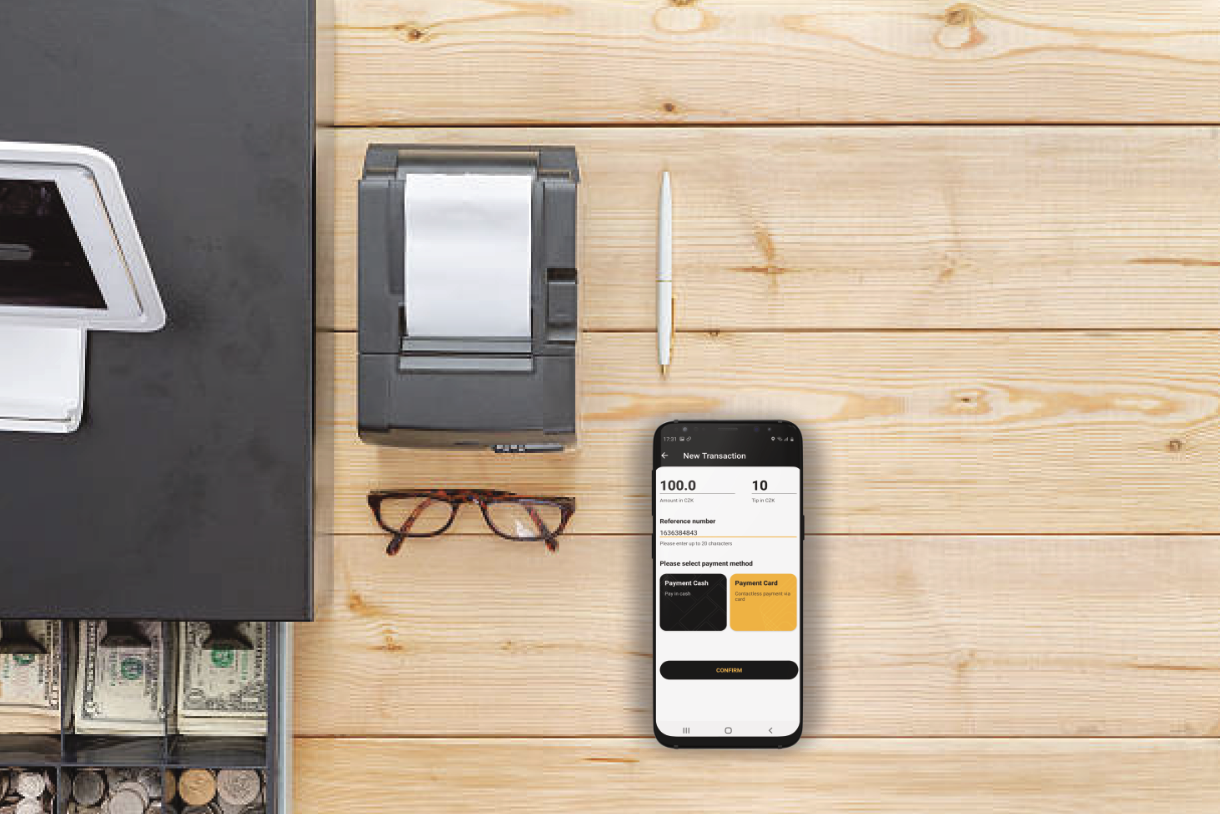
That could change quickly, though. Based on our sales figures, however, we can assure you that mobile payment terminals will take over from traditional terminals in small shops, service sectors, delivery services, the self-employed and many other areas – and this is already happening. Mind you, I wouldn’t want you to get the impression that the mobile terminal has only limited potential – and, to be honest, we too initially set industry boundaries, which soon collapsed entirely. Our customers themselves have confirmed this, and today we have mobile terminal clients across more than two hundred sectors and industries, ranging from small business owners and firms to large corporations. The mobile terminal can consolidate everything into a single, fully open and mobile device. The customer decides what to install on the device, what to use, and, above all, on which device. Yes, and they can initiate card payments via open APIs from their own app or apps. The mobile terminal thus effectively complements the unlimited world of Android with card payments and other methods. If you’re wondering about any boundaries or limitations to this solution, forget about it, because they simply don’t exist. And what about terminal manufacturers? In my opinion, they’re set to face significantly tougher times in the coming years, and sales are unlikely to be what they used to be (some are already feeling the effects of this in our region). But it won’t happen straight away; as I’ve already written, we can’t judge the whole world based on our region, especially when, for example, the US has only recently switched to contactless technology. Perhaps that’s why some manufacturers are venturing into other areas of the payments world.
That time will come, however, and it is the retailers themselves who will benefit most from it. It will no longer be a battle between devices, but between apps. What payment providers have invested in devices, they will now invest in app development. Just look at the banking sector. What else lies ahead for us in this area? What about the Apple platform? Perhaps we’ll discuss that another time.